
MENA Sell
E-commerce Platform
E-Commerce
Affiliate Marketing
Fixing a Broken Selling Workflow for an Affiliate Commerce Platform

Overview
MENA Sell operates an affiliate commerce model. It was a broken tool that affiliators were working around rather than working with. The client needed the product redesigned, not reimagined

My Role
UX workflow designer, evaluation, interaction design, and defining the specialized components used in the final build
The Problem
Two structural workflow failures were creating daily friction for every affiliator on the platform
Broken Order Flow
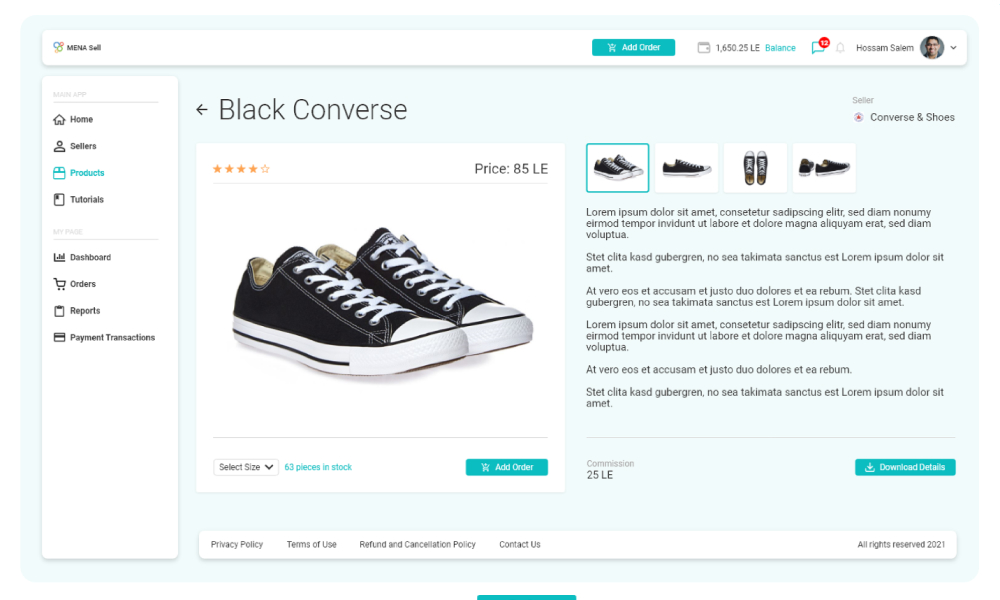
Affiliators could only add products to an order from the orders page. If they were browsing the product catalogue, the natural place to discover what to sell, there was no direct path to add something to an active order. They had to stop, navigate to the orders section, and rebuild their context from scratch. The discovery and selling actions were disconnected, which slowed order placement and created unnecessary navigation steps in a tool people used to earn income
Orders Were Locked After Creation
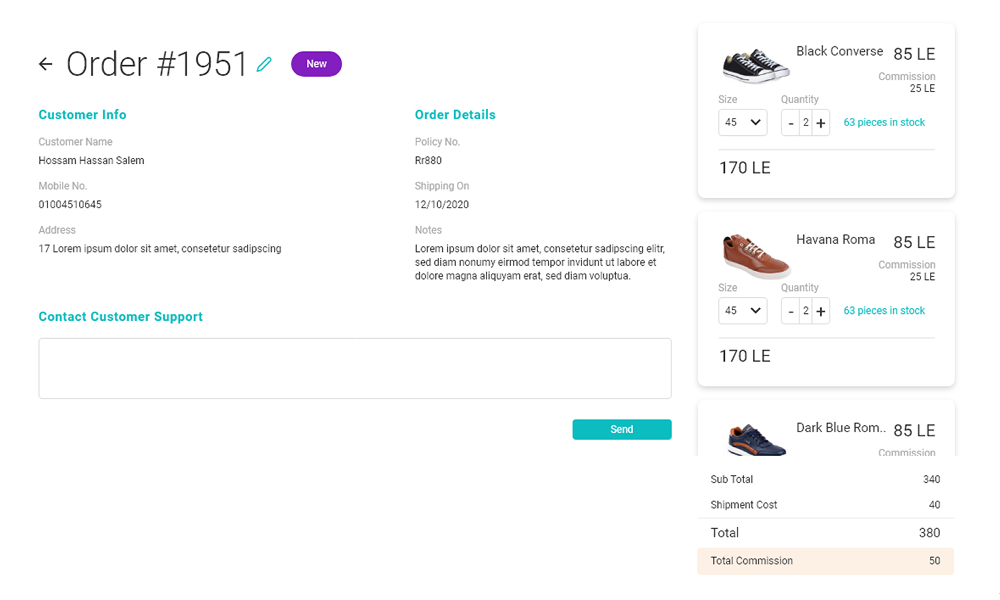
Once an affiliator submitted an order, it could not be edited. If a customer called to change a size, update a quantity, or correct a delivery address, the affiliator had only one option: cancel the entire order and rebuild it from zero. This created a cascading set of problems, wasted time, increased risk of data entry errors on rebuild, and a worse experience for the end customer. An editable order flow is standard in any operational commerce tool. It was missing here
What I Did
Before touching any interface, I mapped the full selling workflow, from product discovery through order creation, status tracking, payment receipt, and withdrawal. This revealed that both problems shared the same root: the product had been built in isolated modules without a through-line that matched how affiliators actually worked.
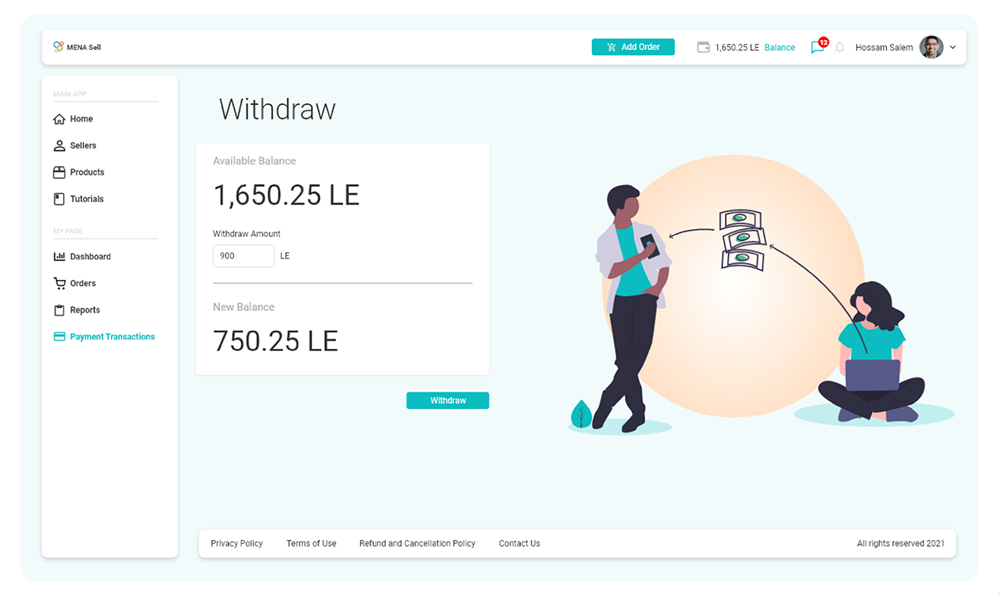
The redesign covered the complete product: a dashboard with balance overview and activity stats, a sellers and brands directory, a product catalogue with detail views that allowed order actions directly from the browsing context, a full orders management system handling eight distinct order statuses, a payment transactions log, and a withdrawal flow.
Two decisions defined the approach:
- Products became actionable from anywhere in the catalogue, not just from the orders page. The natural flow was restored: browse, find, add.
- Orders became editable up to the point of delivery confirmation. Affiliators could update an order without cancelling it. A complete status system, eight states, gave both affiliators and the platform clear operational visibility at every stage.
A design system and style guide were produced alongside the product work, giving the development team a consistent visual language to build from, no interpretation required.
The Solution
Affiliators could place orders from any point in their workflow, not just from the orders section. The disconnection between product discovery and order creation was eliminated. Order changes no longer required cancellation and rebuild. The edit-in-place flow reduced unnecessary work and error risk at one of the most operationally sensitive points in the platform. Following delivery, the client reported that affiliators were more satisfied with the product and that order placement had become significantly faster. The platform's operational tool now matched the way people actually worked.
In addition to being a very talented designer, Hossam is extremely reliable and one of the best designers. He has a knack for taking limited information from clients and creating a solution to meet their business goals
Caren Fang
MENA Sell
Got a similar problem?
Let’s talk